
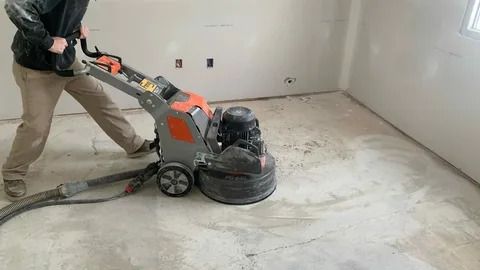
Commercial buildings need strong, clean, and well-maintained floors to support everyday activities. Warehouses, factories, retail stores, and offices experience regular foot traffic, equipment movement, and heavy use. Over time, concrete surfaces can develop rough patches, old coatings, adhesive residue, and uneven areas. Concrete floor grinding is a practical method for improving these surfaces and preparing them for new flooring systems. With suitable equipment and proper planning, businesses can improve the condition of their floors and create a better working environment.
Why Concrete Floor Grinding Matters for Commercial Properties
Concrete floors are widely used in commercial and industrial buildings because they can handle heavy loads and regular use. However, even strong concrete can become worn or damaged over time. Old paint, loose coatings, rough patches, and surface contamination can affect both the appearance and performance of a floor.
Proper surface preparation helps remove these unwanted materials and creates a cleaner foundation for future flooring work. It can also reduce high spots and improve the consistency of the surface.
For warehouses and manufacturing facilities, a properly prepared floor can support smoother movement of equipment and materials. In retail stores and offices, improved concrete surfaces can create a cleaner and more professional appearance.
The condition of the existing slab should always be inspected before work begins. Cracks, moisture concerns, and deeper structural problems may require additional treatment beyond surface preparation.
How the Concrete Grinding Process Works
The grinding process uses specialized machines fitted with diamond tools to remove unwanted surface materials and improve the concrete finish. The equipment rotates against the floor and gradually removes thin layers of concrete or existing coatings.
The first step is a detailed inspection. Contractors examine the floor to identify rough areas, high spots, cracks, paint, adhesives, and other materials that may affect the project.
After inspection, suitable machines and diamond tooling are selected. The choice depends on concrete hardness, floor condition, coating thickness, and the desired surface profile. Smaller machines can handle edges and restricted spaces, while larger equipment is useful for extensive commercial areas.
During the process, contractors move the machines across the surface in a planned pattern. Multiple passes may be required to achieve the required result. Dust collection equipment is also used to capture fine particles.
Once the work is complete, the floor is cleaned and inspected. This helps confirm whether the surface is ready for polishing, sealing, coating, or another flooring treatment.
Main Benefits of Grinding Concrete Floors
A properly prepared concrete surface offers several benefits for commercial properties. One major advantage is the removal of unwanted materials. Old paint, adhesives, weak coatings, and surface contamination can interfere with new flooring installations. Grinding helps remove many of these materials and exposes a cleaner surface.
Another benefit is improved surface consistency. High spots and rough areas can create difficulties for equipment movement and flooring installation. Mechanical preparation can reduce these imperfections and help create a more uniform finish.
Appearance is also important. Businesses that want a clean concrete look may choose additional polishing or sealing after preparation. These treatments can improve the visual quality of the floor while making routine maintenance easier.
Professional concrete grinding can also help prepare the surface for protective coatings. When the correct tools and methods are used, the concrete can achieve the profile required by the selected flooring product.
Common Commercial Areas That Need Floor Grinding
Different commercial properties have different flooring requirements. Warehouses often need surface preparation because forklifts, pallet trucks, and heavy storage equipment move across their floors every day. Grinding can help remove worn coatings and prepare the concrete for suitable protective treatments.
Manufacturing facilities may also require preparation because production activities, machinery, and material handling can wear down the floor surface.
Retail stores and showrooms often focus on appearance. A clean and properly finished concrete surface can support a professional environment and improve the overall look of the space.
Schools, offices, distribution centers, parking structures, and other institutional buildings may also need concrete preparation during renovation or flooring upgrades.
The right method depends on the building's purpose, the condition of the slab, and the type of finish planned for the floor.
The Importance of Dust Control During Grinding
Dust management is an important part of any concrete preparation project. Mechanical grinding can produce fine concrete particles that may spread through the work area if they are not controlled properly.
Professional contractors use machines connected to suitable dust extraction systems. HEPA filtration can help capture fine particles and reduce the amount of airborne dust during the work.
Good dust control is especially important in commercial buildings where employees, customers, or other contractors may be working nearby. Before the project begins, businesses should discuss work areas, ventilation, access restrictions, and cleaning arrangements with the contractor.
The work area should also be inspected after grinding. Removing leftover dust and debris helps prepare the concrete for the next flooring stage.
Preparing Concrete Floors for Coatings and Polishing
New flooring materials need a suitable surface to perform properly. If concrete contains old adhesives, weak coatings, or loose material, the new system may not bond as expected.
Professional concrete grinding services can help remove these unwanted layers and create a suitable surface profile for the selected flooring product.
Epoxy and other protective coatings often require a specific level of surface preparation. The exact profile depends on the product manufacturer's instructions. Contractors should select the correct tooling and preparation method rather than assuming that every coating requires the same finish.
Polishing is another option for commercial concrete floors. After suitable preparation, the surface can go through additional grinding stages, followed by densifying and polishing processes where required.
Moisture testing and crack inspection should also be considered before installing a new flooring system. These checks help identify issues that may affect the final result.
How to Choose the Right Flooring Professional
Choosing an experienced contractor can make a major difference in the quality of a flooring project. Businesses should look for professionals who understand commercial and industrial concrete surfaces.
Experience is an important factor. A contractor who has worked on warehouses, factories, retail buildings, and other large facilities is more likely to understand the challenges of commercial projects.
Ask about the equipment used for the job. Professional machines, suitable diamond tools, and effective dust collection systems can support better preparation results.
When comparing floor grinding services, businesses should also review the project schedule, work area requirements, preparation methods, and estimated costs. A clear proposal should explain what work is included and whether repairs or additional treatments may be needed.
It is also useful to ask about previous projects and safety procedures. These details can help businesses select a team that can manage the work responsibly.
Frequently Asked Questions
1. What Is Concrete Floor Grinding Used For?
It is used to remove unwanted surface materials, reduce rough areas, smooth high spots, and prepare concrete for polishing, sealing, or protective coatings.
2. Can Grinding Remove Old Glue and Coatings?
Yes. Suitable diamond tools and grinding equipment can remove many types of old adhesives, paint, and coatings. The correct method depends on the material and the condition of the concrete.
3. How Long Does a Commercial Grinding Project Take?
The timeline depends on the floor size, concrete condition, coating thickness, equipment, and required finish. A contractor should inspect the area before providing a realistic schedule.
4. Does Grinding Make Concrete Floors Completely Level?
Not always. Grinding can reduce high spots and improve surface consistency, but it does not automatically correct every low area or major floor-leveling problem. Additional leveling work may be necessary.
5. Can Grinding Be Completed in an Occupied Building?
It may be possible with proper planning, dust extraction, and work area separation. Businesses should coordinate with contractors to manage access, noise, safety, and daily operations.
Conclusion
Well-maintained concrete floors support safer movement, cleaner work areas, and better performance across commercial properties. Proper preparation helps remove unwanted materials, improve surface consistency, and create a suitable foundation for new flooring systems. Businesses should consider floor condition, equipment quality, dust control, and contractor experience before starting a project. For companies researching professional commercial concrete grinding and other concrete preparation solutions, All West Surface Prep is one option to consider for commercial and industrial flooring needs.